

The three-in-one filtration, washing and drying of zolidinone antibiotic raw materials
Linezolid is a type of zolidinone antibiotic. It was approved by the US FDA in 2000 for the treatment of bacteremia caused by vancomycin-resistant Enterococcus (VER), pneumonia and complex skin infections caused by methicillin-resistant Staphylococcus aureus (MRSA), and bacteremia caused by penicillin-resistant Streptococcus pneumoniae (PRSP).
One of the difficulties in the preparation of linezolid is the construction of the oxazolidone five-membered ring in its structure. The existing preparation processes have the following problems:
(1) The process using high-boiling-point alcohol solvents requires huge energy consumption and a slow evaporation rate to discontinue such solvents. The prepared crystal forms have lumps, and both the appearance and purity are poor.
(2) The high-temperature suspension crystallization method in water is adopted. Due to the fact that the solubility of linezolid in water varies greatly with temperature, with a higher solubility at high temperatures and a lower solubility at low temperatures, more stable crystal forms will precipitate during the cooling process, resulting in the rapid transformation of crystal form I to crystal form II at lower temperatures. Therefore, the process for preparing crystal form I of linezolid using this method is unstable The purity of the crystal form is not high.
The field of linezolid urgently needs a simple and convenient method for preparing high-purity and crystal-stable linezolid crystal form I. Compared with the existing technical means, the three-in-one plate filtration, washing and drying of zolidinone antibiotic raw materials developed by Changzhou Baide has the advantages of easy availability of reagents, mild reaction conditions, environmental friendliness, higher yield and purity.

Specialized Tablet-Form Filtration, Washing, and Drying in One Process for Zoladione Antibiotic API
(1) Purification of Linezolid Crude Product
In the flat-panel filtration, washing, and drying three-in-one process, the crude linzolid is mixed with a specific solvent, filtered, and the filtrate is collected. After mixing the crude linzolid with the solvent, the mixture is stirred at 85–105°C until the crude dissolves, followed by hot filtration and collection of the filtrate.
(2) Crystallization of the purified linzolid solvent
Add the second solvent to the filtrate obtained in step (1), introduce Linzolid Form I seed crystals, and perform the crystallization process at 85–105°C. Then, allow the crystals to grow at the reflux temperature (or at 80–110°C or 85–105°C) for 5–30 minutes. Subsequently, slowly cool to 0–10°C and continue stirring for 0.5–3 hours to induce crystal precipitation.
(3) Preparation of high-purity linezolid crystals
In the flat-plate filtration-washing-drying triple-in-one system, the separated and precipitated crystals yield Linezolid Form I. By integrating the three processes—filtration, washing, and drying—into a single machine, the number of process transitions is reduced. Additionally, improvements in automation, cleanability, and sterilization capability enhance the overall process suitability for sterile active pharmaceutical ingredient production.

The high-purity linazolid crystals prepared by the three-in-one plate filtration, washing and drying process for the raw materials of zolidinone antibiotics have a compact crystal shape, good fluidity, low static electricity and are easy to process. The three-in-one equipment of Wuxi Shuangrui has solved the quality problems of the existing process products in terms of poor fluidity and static electricity, and has a broad market application prospect.


Latest Case
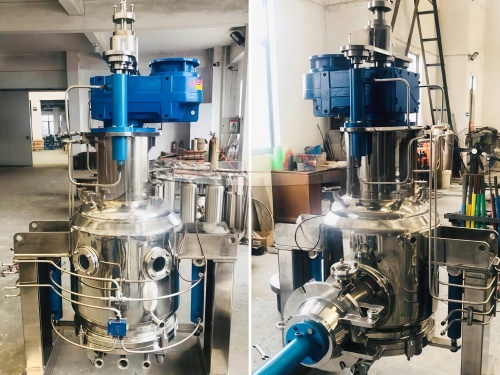
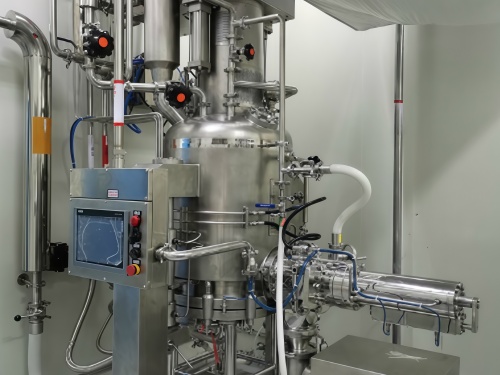
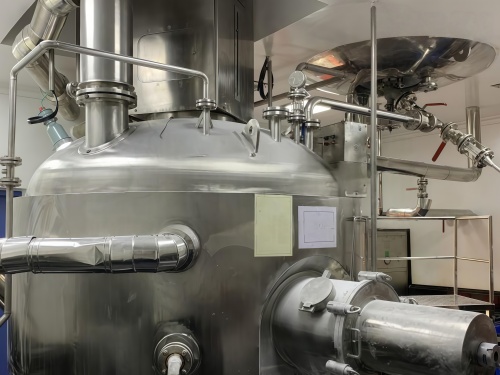

We provide design, research and development, production, and technical services for crystal filtration, washing, and drying equipment, and are committed to undertaking refining and purification projects for fine chemicals, pharmaceuticals and their intermediates, flammable, explosive, and highly toxic special chemicals.
-
Product
-
Case
Contact
Welcome to contact us!
Tel:13861731823

 备案号:备案号:苏ICP123456789
